In-person academic coaching · San Francisco Bay Area
Get individualized academic, executive-function, and high-school readiness coaching for middle and early high-school students in the San Francisco Bay Area. I provide support across core content areas, with particular expertise in mathematics. I help your student strengthen essential academic skills, develop more independent routines, and enter high school prepared for greater responsibility.
Teacher Excellence
Recipient of a Network Teacher Excellence Award at Success Academy Charter Schools.
Test-Preparation Growth
Students regularly improve by 20 or more percentile points on the HSPT and SSAT.
High-School Admissions
Students supported have earned admission to St. Ignatius, Sacred Heart Cathedral, and Stevenson.
Students rarely struggle in only one isolated area. Services can be combined into an individualized plan that addresses immediate academic needs and long-term readiness.
Academic Support Across Content Areas
I help students build skills, close gaps, and understand coursework more deeply. They receive targeted instruction across core academic subjects based on diagnostic information, schoolwork, and observed patterns of understanding. Mathematics is a particular area of expertise, but support can also include humanities and English language arts, science, and other middle- and early high-school coursework.
Diagnose gaps using schoolwork, targeted assessments, and patterns in student errors
Re-teach specific skills such as fraction operations, equations, graphing, reading comprehension, and written responses
Preview and review current coursework, quizzes, and tests
Track mastery through focused learning goals and clear progress updates
Executive-Function and High-School Readiness Coaching
I help students develop routines that make greater independence possible. Rather than simply supervising homework, coaching helps students understand and gradually manage the processes behind successful schoolwork.
Organize Google Classroom, Blackbaud, and other school platforms into one reliable assignment system
Complete weekly checks for missing work, upcoming assessments, and conflicting deadlines
Break long-term projects into milestones and schedule realistic study blocks
Build repeatable routines for starting homework, submitting work, and communicating with teachers
High-School Admissions and Test Preparation
I help students and families approach the application process with clarity and preparation. They receive structured support for independent-school applications and the HSPT, ISEE, and SSAT. Students I have supported have earned admission to competitive independent and Catholic schools including St. Ignatius College Preparatory, Sacred Heart Cathedral Preparatory, and Stevenson School.
Build a school list around academic fit, student priorities, and needed supports
Create an application calendar for visits, forms, essays, recommendations, and deadlines
Use HSPT, ISEE, or SSAT diagnostics to target the highest-impact skills
Practice authentic student-led essays and interviews with specific feedback
More than homework completion
Effective academic support should do more than help your student finish tonight’s assignment. My goal is to help your student understand how they learn, develop strategies they can use independently, and experience measurable progress over time.
Individualized
Support begins with your student’s actual skills, habits, goals, and school context.
Evidence-informed
Practice draws on classroom experience, educational psychology, executive-function research, and established instructional methods.
Collaborative
When appropriate and authorized by the family, support can include communication with parents, teachers, and other members of your student’s team.
Progress-oriented
Families receive clear information about current priorities, observed progress, and recommended next steps.
What working together looks like
1. Initial consultation — Discuss your student’s strengths, current challenges, educational history, and goals.
2. Review and assessment — Review relevant school information and use diagnostic activities when helpful.
3. Individualized plan — Establish focused priorities and a proposed session structure.
4. Ongoing sessions — Provide consistent, individualized support that adjusts as needs change.
5. Family communication — Share concise updates about priorities, progress, and ways to reinforce independence.
About Malcolm Richardson
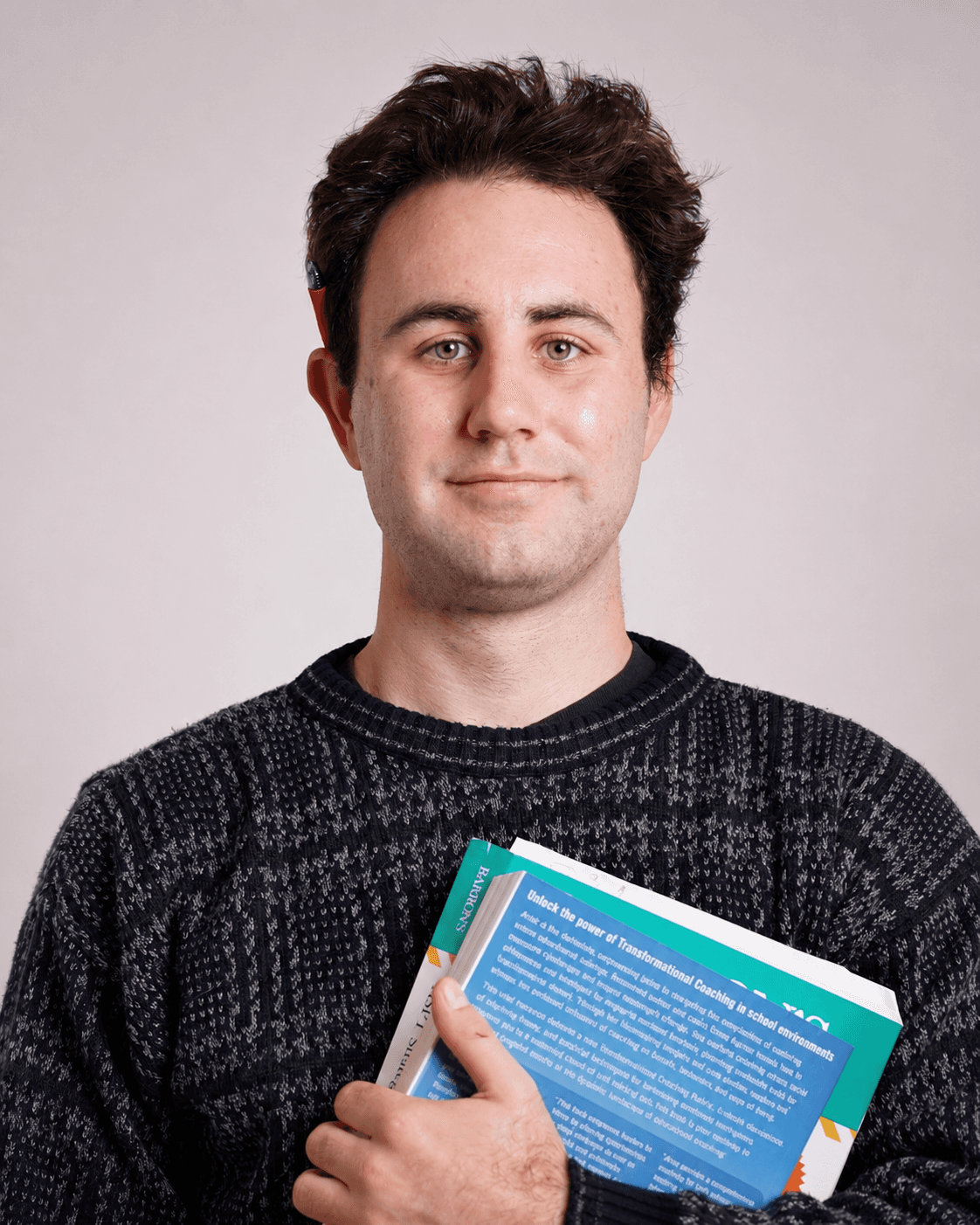
I am an educational consultant and high-school readiness coach specializing in middle-school academics across content areas, executive functioning, and the transition to high school, with particular depth in mathematics.
I began my career as an eighth-grade teacher at Success Academy Charter Schools in New York City, where I received a Network Teacher Excellence Award and supported students preparing for demanding high-school coursework and competitive admissions processes.
Today, I work individually with Bay Area students and families to address academic gaps, strengthen learning routines, prepare for high-school admissions, and navigate the increased expectations of ninth and tenth grade.
I am currently completing an M.S. in Educational Psychology at the University of Wisconsin–Madison, where my thesis examines executive-function coaching and the use of screen-based classroom tools such as Google Classroom and Blackbaud.
My approach combines the perspective of a classroom teacher with the responsiveness of individualized coaching. I want students not only to perform better in school, but also to become more capable of understanding their needs, using effective strategies, and advocating for themselves.
A few of the books and articles currently informing my work with students and families.
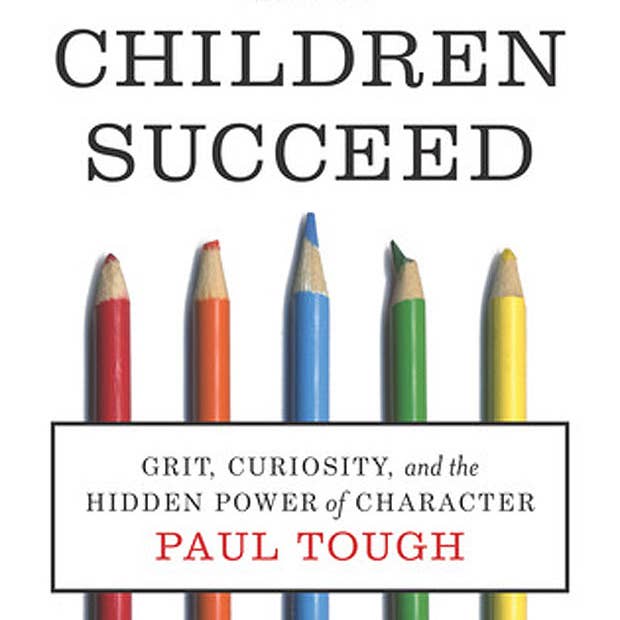
Tough, P. (2012). How children succeed: Grit, curiosity, and the hidden power of character. Houghton Mifflin Harcourt.
Tough explores how qualities such as persistence, curiosity, conscientiousness, and self-control interact with children’s environments and opportunities. The book offers a useful framework for thinking beyond academic skills alone when helping students develop confidence and independence.
Executive Functions
Diamond · 2013
This foundational review explains the central executive functions of inhibitory control, working memory, and cognitive flexibility. These capacities shape how students manage attention, regulate their behavior, solve problems, and adapt when schoolwork becomes more demanding.
Improving Students’ Learning
Dunlosky et al. · 2013
The authors evaluate ten widely used learning techniques and distinguish strategies with strong evidence from those that merely feel productive. Their findings—particularly on practice testing, distributed practice, self-explanation, and interleaving—help inform how I teach students to study more effectively and independently.
Signs of an Inclusive School
Swedeen · 2009
Writing from a parent’s perspective, Swedeen offers practical questions for determining whether a school provides genuine belonging, participation, and appropriately ambitious opportunities for students with disabilities. The piece is a valuable reminder that inclusion is about the quality of a student’s experience—not simply physical placement in a classroom.
Learning Styles
Pashler et al. · 2008
This review examines whether matching instruction to a student’s preferred “learning style” improves achievement. The authors find insufficient evidence for the common meshing hypothesis, reinforcing the importance of choosing teaching methods based on the content, the learner’s prior knowledge, and strategies with demonstrated effectiveness.
The Developing Mind
Siegel · 1999
Siegel, D. J. (1999). The developing mind: Toward a neurobiology of interpersonal experience. Guilford Press.
Siegel’s interdisciplinary account of interpersonal neurobiology explores how relationships and experience shape the developing mind. It offers a useful lens for understanding learning, emotional regulation, attachment, and the relational conditions that help young people grow.

Comparing children at the beginning and end of middle childhood, the authors document meaningful development in selective stopping, response inhibition, attention, and strategy use. The study helps ground executive-function coaching in the developmental changes occurring across the elementary and middle-school years.

In a classroom experiment, students experiencing frequent text-message interruptions performed worse on a lecture recall test than students with few or no interruptions. The findings highlight the learning costs of repeated task switching and the value of explicit routines for managing digital distraction.
Help your student prepare for what comes next
Whether your student needs targeted academic instruction, more sustainable school routines, or structured preparation for high school, the first step is a conversation about what is happening now and what meaningful progress would look like.
Schedule a Consultation
In-person support for students in the San Francisco Bay Area.